Long before the Idaho Community Foundation (ICF) became a statewide force for good, it was something much smaller — an idea, a vision, and a handful of people willing to do the work to make it real.
In those early years, the Foundation didn't yet have the reach, the structure, or the recognition it does today. What it did have were people who believed in it — people who volunteered their time, created its first funds, and helped carry boxes, write policies, and build momentum from the ground up.
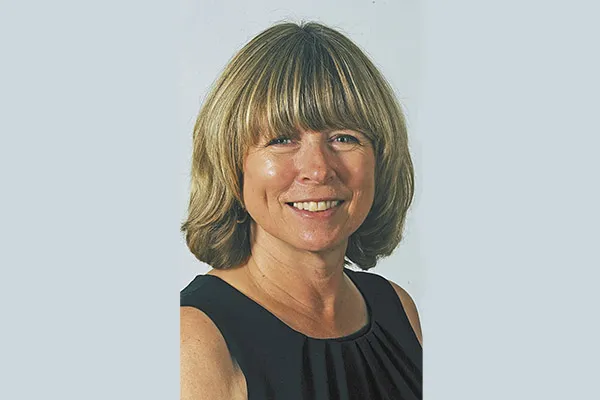
Linda Grable-Curtis was one of them.
A Builder Behind the Scenes
"I really am a behind-the-scenes person," Linda once said. "I can do my part this way, out of the spotlight, and still get the feeling that I'm doing some good."
That instinct — to contribute quietly, but meaningfully — placed her at the heart of the ICF's earliest days. She began as a volunteer and later worked as a staff member, part of a tiny team of just a few people responsible for launching what would become a statewide philanthropic institution.
There was nothing polished about those early years.
Linda remembers moving into the Foundation's historic home — long before it was renovated or restored — and spending hours navigating a dim, cluttered basement, carrying boxes up and down rickety stairs. The work wasn't glamorous. It was physical, foundational, and necessary.
Those moments — clearing space, organizing materials, building systems — were part of a much larger effort: creating something Idaho had never had before. A community foundation for the entire state.
Giving Shape to an Idea
At the same time she was helping build the organization, Linda was also shaping its future through her own philanthropy.
In 1990, as ICF was still in its infancy, Linda established one of its early funds: a scholarship created in memory of her parents, the Donovan and Evelyn Grable Memorial Scholarship Fund.
The fund reflects her mother Evelyn's deeply practical philosophy about education and independence. Evelyn believed everyone should learn a skill they could rely on, and she often reminded Linda, "Don't forget to learn typing and shorthand so you can earn a living." Linda took that advice seriously. She went on to college, learned both typing and shorthand — among other skills, and still takes notes in shorthand today. In honoring her parents through this scholarship, she also honored a way of thinking: that education should equip people for real life, open doors, and create stability. Over the years, the scholarship has helped Idaho students pursue that same promise of opportunity.
A World of Possibility
For Linda, education was never confined to a classroom or a particular stage of life. It was an ongoing pursuit, something to be encouraged and supported at every age. As a Boise travel agent with a deep love for geography and global cultures, she believed education should widen a person's view of the world. She didn't want people simply to visit new places; she wanted them to understand them.
That belief led to action.
Two years later, she created what would become one of her most defining contributions: the Geography Knowledge Fund, established to further the study of geography for Idaho students from kindergarten through high school.
That love of geography began early. As a young girl in Long Beach, California, Linda would sit at her small desk with a map or globe nearby, tracing the routes of her father's work travels to places far beyond her own horizon.
Following his journeys sparked a fascination with the wider world and gave geography a personal meaning. It was never just about place names or borders. It was about connection, imagination, and understanding how people live in different corners of the world.
The purpose of the fund was simple and ambitious at the same time — to help schools access updated maps, globes, and materials that would connect students to the broader world beyond Idaho.
A National Voice for Education
Linda's passion for geography extended far beyond Idaho.
Beginning in 1990, she committed to making annual contributions to support educational programs through the National Geographic Society. Her dedication and consistency earned her national recognition.
In 1994, she was featured in National Geographic magazine for her support of geography education.
Recognition followed from close to home as well. Idaho Governor Cecil Andrus, community leaders, and business partners all reached out to thank her for her contributions to education. Even ICF founding chairman John Fery personally acknowledged her work, recognizing both her generosity and her role as a friend and early supporter of the Foundation.
But recognition was never the goal.
For Linda, geography was more than a subject; it was a way of understanding people, culture, and connection. It teaches far more than maps and landforms. Geography helps students make sense of climate, migration, resources, and the ways communities are shaped by the places they inhabit. It offers context for a vast and interconnected world, helping young people see not only where others live, but how lives across continents are linked in meaningful ways.
"Kids need to understand that among the world's people we are all very different, yet we are very similar," she said. "Geography brings that home."
A Life Shaped by Curiosity
If there is a single thread that runs through Linda's life and her philanthropy it is curiosity.
Her work in travel exposed her to different cultures and landscapes around the world. But her interest did not stop there. She continued to explore new ideas long after her funds were established, immersing herself in subjects like archaeology, history, and an extensive postcard collection. For Linda, postcards were never just keepsakes. They were a form of connection across distance: small windows into other places, landscapes, and daily lives. Long before the internet made the world feel instantly accessible, postcards helped people share where they had been and what they had seen. It is a tradition she still cherishes.
In her own words, she described herself as "a very amateur archaeology student… but one who tries to keep learning through courses and readings." That commitment to learning has remained a constant throughout her life. Even now, she continues to pursue new knowledge wherever she can find it, including enrolling in classes at Oxford, where she still has an active student ID. For Linda, learning has never been a phase. It is a practice, a discipline, and a source of joy.
That always-learning mindset is one of the qualities that makes her story so compelling. And it is what inspired her philanthropy.
A Legacy That Evolves
Linda's third fund reflects another dimension of her life, one rooted not in maps or classrooms, but in compassion.
Originally created to support small animals, especially ferrets, a longtime affection she shares with her husband, Terry, the fund evolved over time.
Today, it supports a broader range of animal-focused work, including organizations like Mini Joys, which uses small ponies to provide therapeutic support for children and individuals facing physical, mental, or emotional challenges.
Her giving has also extended to organizations committed to animal care and conservation, including Zoo Boise and Heart of Idaho Animal Sanctuary in Challis. Together, those gifts reflect a wide-ranging compassion for animals and the many ways they enrich human lives.
Like ICF, Linda's funds have never been static. They have adapted, grown, and responded to changing needs, while remaining grounded in the same core values that inspired them in the beginning.
Planting Seeds for the Future
In many ways, Linda's story mirrors the early story of ICF.
It began with a handful of people and a bold idea. It grew through persistence, creativity, and community support. And it took shape because individuals were willing to invest, not just financially, but personally, in something larger than themselves.
Today, the Foundation looks very different. The staff has grown from just a few to dozens. Its reach extends across all 44 counties. It has expanded partnerships, merged programs, and deepened its impact in ways that early supporters could only imagine.
But the foundation of that success remains the same.
People like Linda. People who believed in the idea before it was fully formed. People who contributed quietly but consistently. People who helped build — not for recognition, but for impact.
The Power of One Person
At a time when it might have been easy to assume that meaningful change required large institutions or major resources, Linda demonstrated something different.
One person — with curiosity, commitment, and a willingness to act — can make a lasting difference.
Her story is not just about the early days of the Idaho Community Foundation. It is about what those early days required.
Vision. Work. And people who cared enough to begin.